Portfolio
Examples of practical AI, automation, and workflow design
These examples reflect the kind of work I design and deliver: structured intake,
process improvement, and lightweight automation that solve real business problems
without unnecessary complexity.
Selected work
Two examples are shown below: workflow automation and structured AI-assisted intake.
Together they demonstrate how I bring clarity, structure, and execution to business processes.
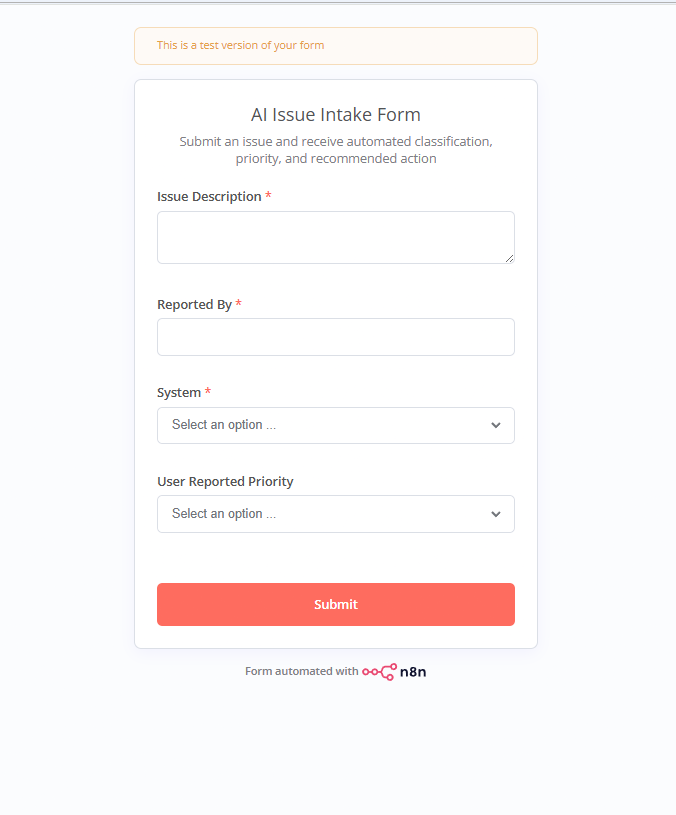
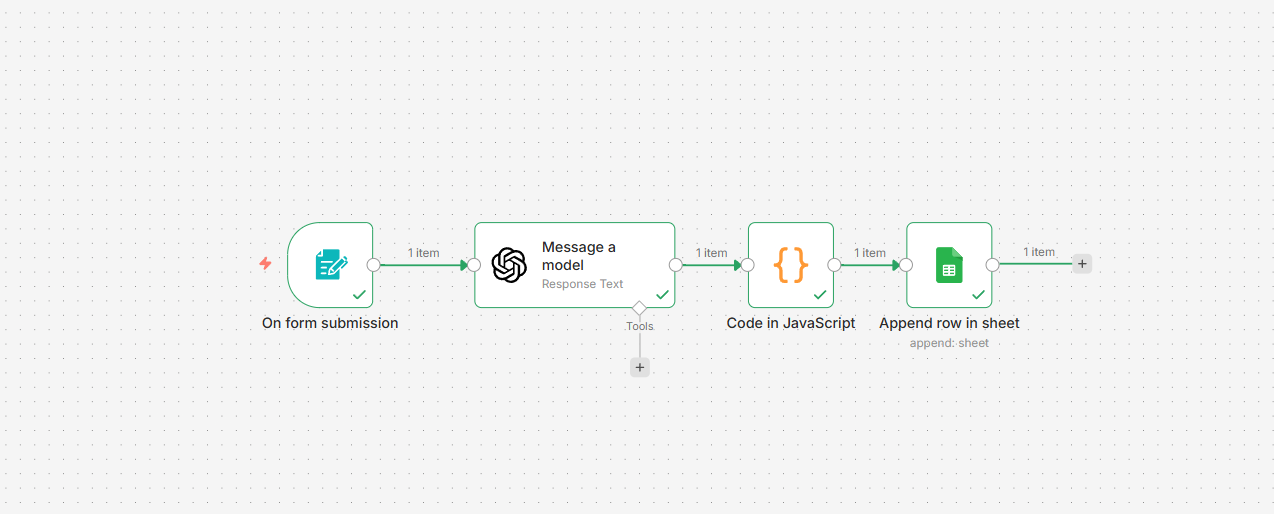
This workflow transforms a manual defect intake process into a consistent,
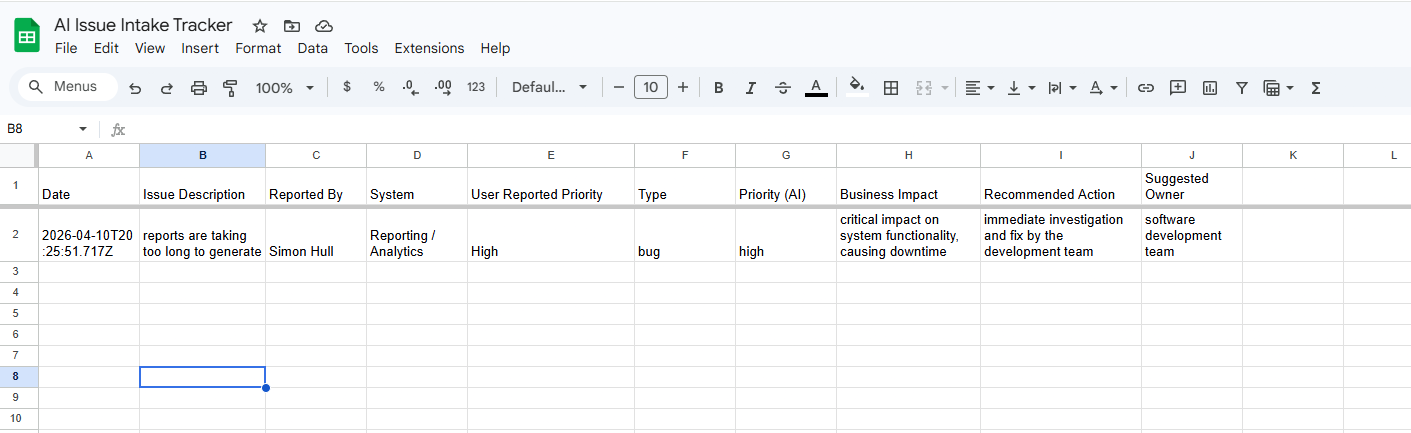
trackable operating model. A structured form captures inputs, n8n routes the data,
and results are recorded in a shared tracking system.
Business problem
Inconsistent defect reporting creates rework, slows triage, and reduces visibility.
Approach
Standardized intake and automated routing using n8n with a shared tracking output.
Value
Cleaner inputs, reduced manual handling, and improved visibility across teams.
What it demonstrates:
translating a manual process into a structured, repeatable workflow.
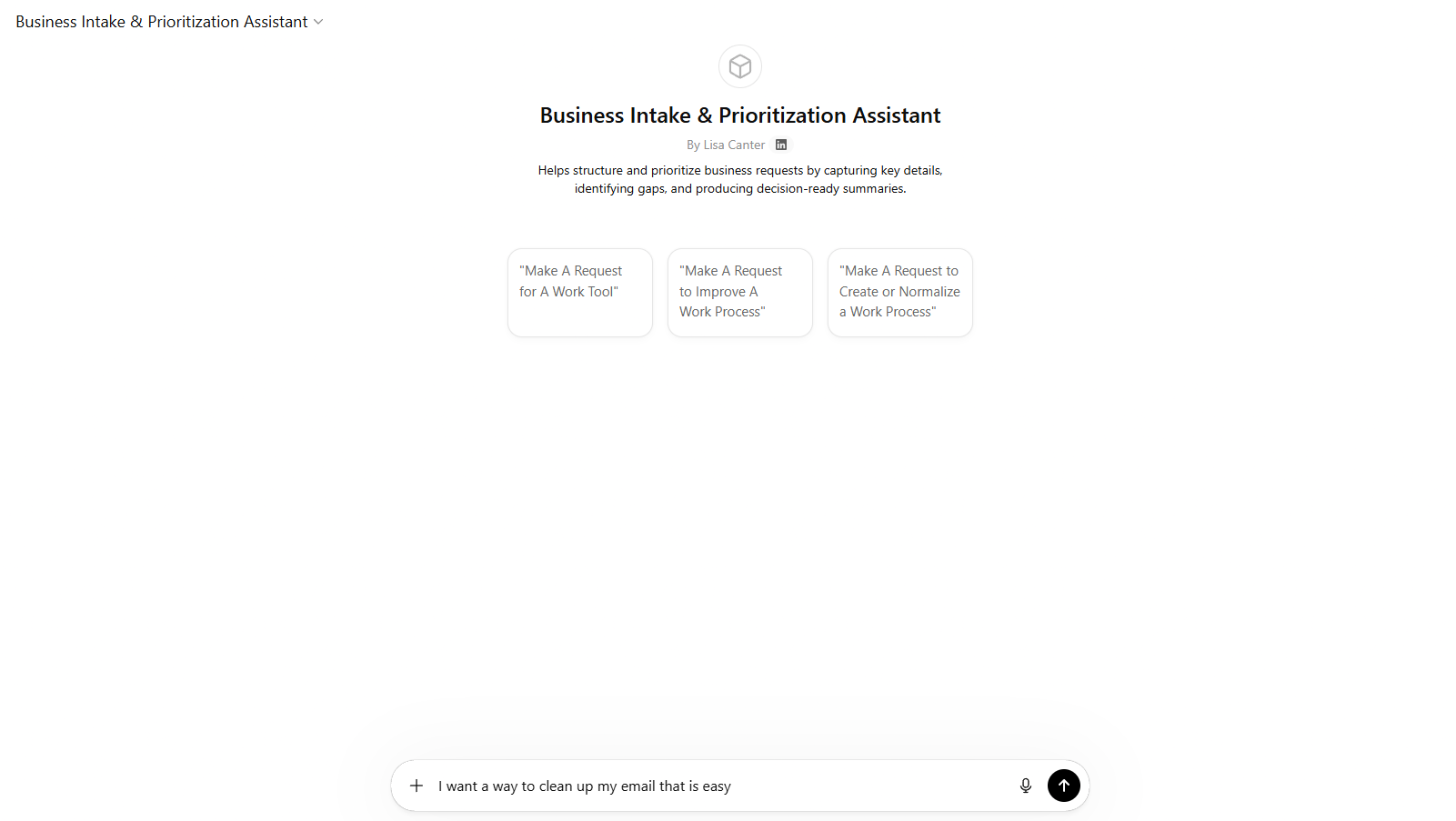
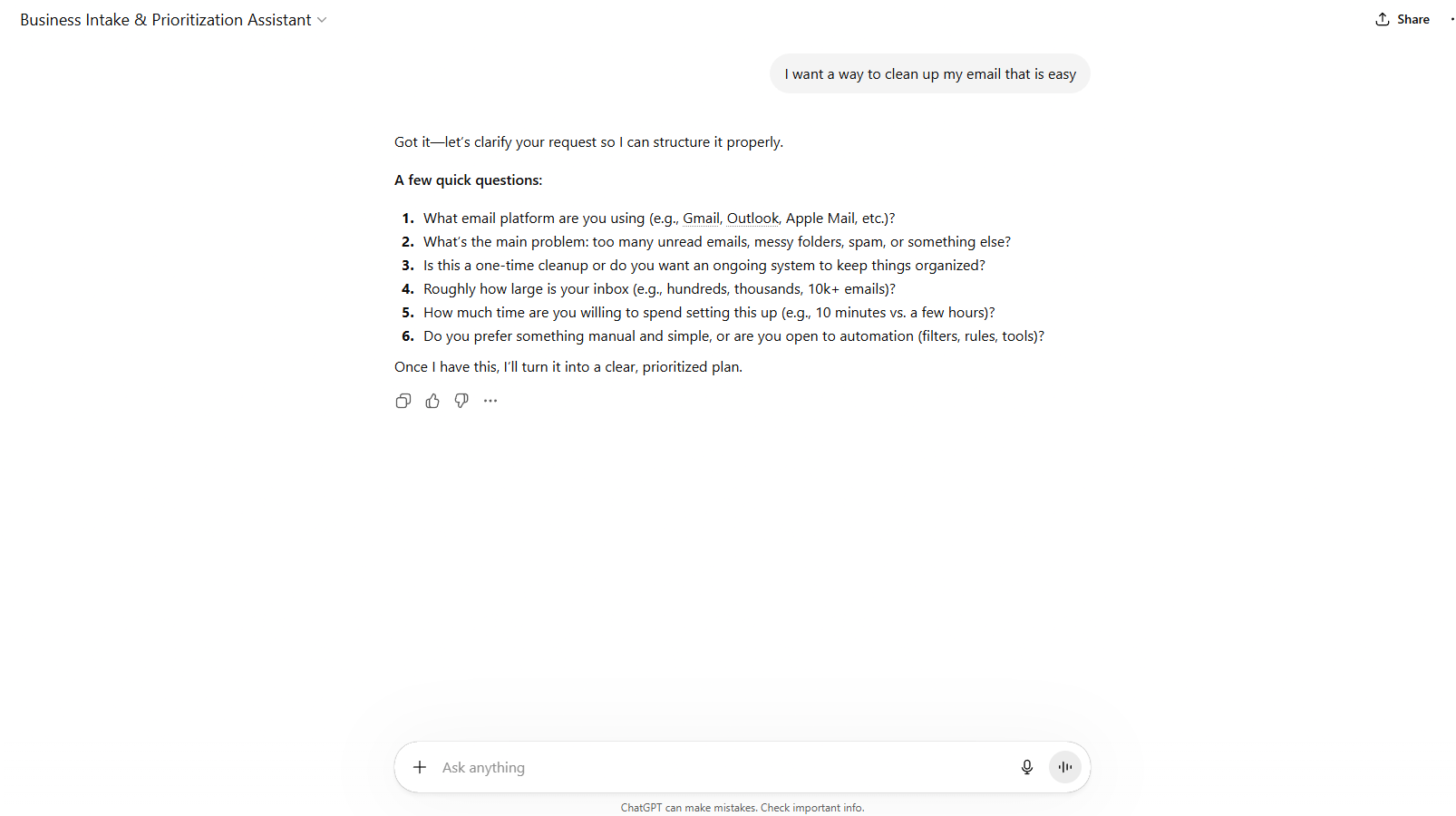
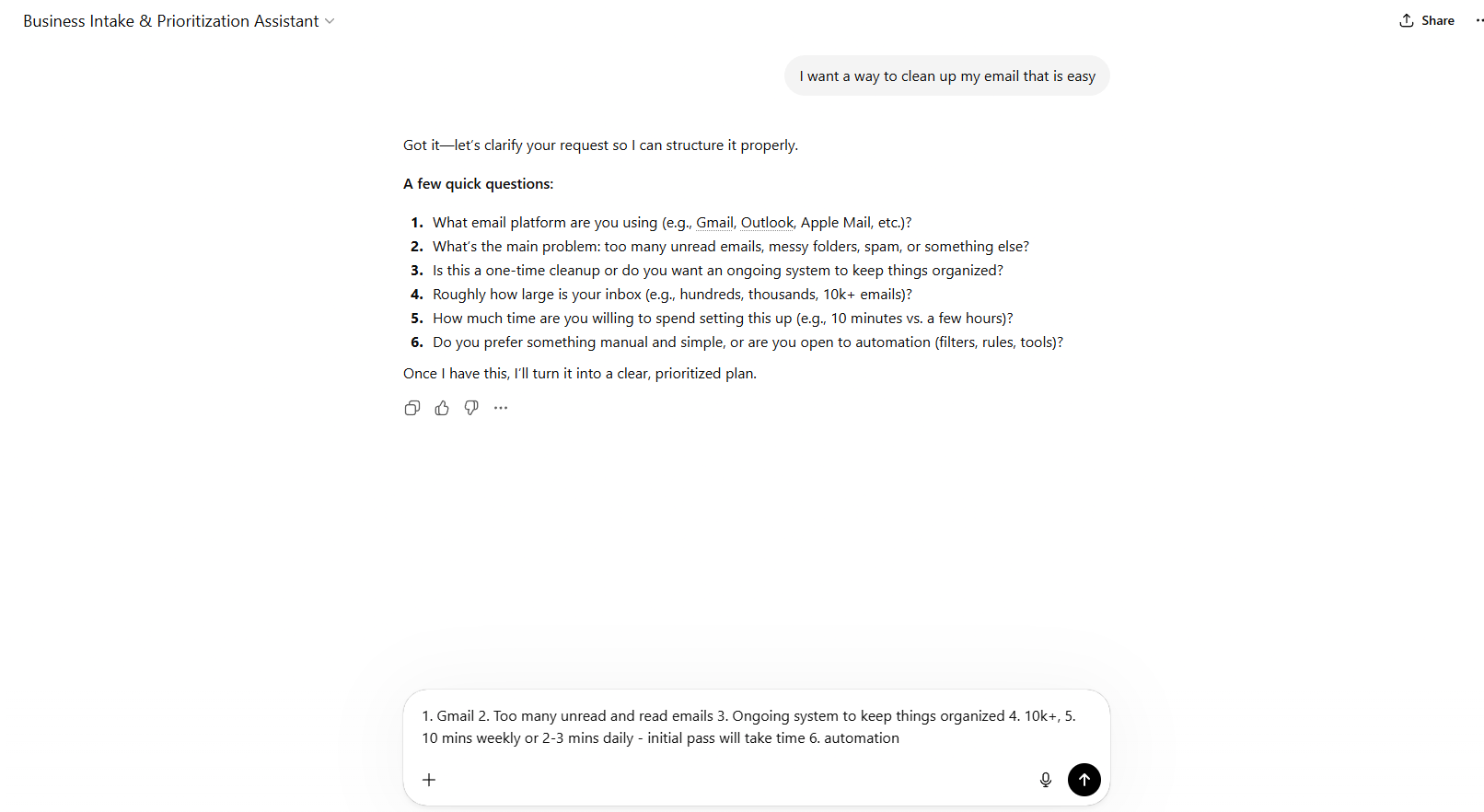
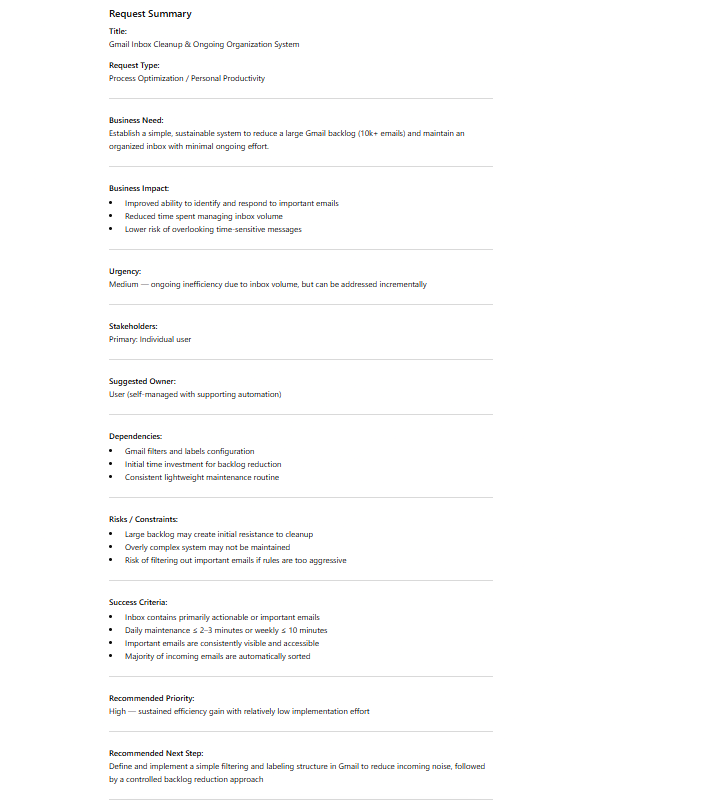
This solution improves intake quality by guiding users through clarification before producing
a structured, decision-ready summary.
Business problem
Requests are often vague or incomplete, leading to delays and rework.
Approach
AI-driven intake that asks questions first, then structures the request.
Value
Faster prioritization with clearer, more complete inputs.
What it demonstrates:
AI used to improve process clarity—not just generate content.
How I approach this work
I focus on business-ready solutions: clarify the problem, define the workflow,
reduce friction, and apply the right level of automation.
If your team needs help improving intake, workflow clarity, or execution consistency,
I’d be glad to discuss it.